

US-Pakistan Policy Forum (USPPF) was launched as a special initiative in 2025. The Forum is an independent research and training platform that generates knowledge and insights to inform policymakers and public debate on U.S.-Pakistan relations and Pakistan’s increasing presence in regional and global issues.
The goals of USPPF are to strengthen bilateral U.S.-Pakistan relations by addressing shared challenges aligned with mutual interests. As an independent policy forum, USPPF rigorously analyzes the nuances of bilateral diplomacy, security policy, commercial and trade issues, opportunities for constructive dialogue, and policy debates for global peace and security.
In pursuit of these goals, USPPF positions itself as a nonpartisan convener of ideas, fostering dialogue among scholars, policymakers, and practitioners. USPPF’s foundational principles guiding its work are methodological objectivity, interdisciplinary collaboration, and intellectual independence. By situating research within both national and international contexts, USPPF seeks not only to inform policy but also to contribute to the global discourse on governance, development, education, and security.
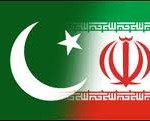 Dr. Qamar-ul Huda writes in the
  Dr. Hassan Abbas quoted in The New York Times: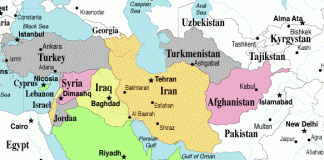



 Naade Ali is a US-Pakistan Policy Forum Fellow at PoliTact.
 Dr. Hassan Abbas is a Distinguished Professor of International Relations at the Near East South Asia Center for Strategic Studies (NESA Center) in Washington, D.C. He also serves as a senior advisor at Project on Shi’ism and Global Affairs at Harvard University’s Divinity school; and a non-resident scholar with Institute for Social Policy and Understanding, a think tank focusing on research and education about American Muslims to support well-informed dialogue and decision making; and as a trustee of American Institute of Pakistan Studies (AIPS) at the University of Wisconsin-Madison.
 Dr. Qamar-ul Huda is the Michael E. Paul Distinguished Visiting Professor of International Affairs at the United States Naval Academy. Previously, he served as an associate adjunct professor at Georgetown University’s School of Government. Dr. Huda was a Senior Policy Advisor for U.S. Department of State Secretary’s Office for Religion and Global Affairs (S/RGA) where he focused on civil society, religious communities, and diplomacy with non-government organizations.
 Arif Ansar is the Chief Analyst and CEO of PoliTact, a Washington, D.C.-based strategic advisory firm founded in 2009. Arif brings over 25 years of consulting experience across various branches of the U.S. government, including the Department of Defense, USAID, the Department of State, and the U.S. Geological Survey. His cross-industry expertise spans the Defense, Security, International Development, and Information Technology sectors, having held positions at Boeing, Science Applications International Corporation (SAIC), Northrop Grumman, and the Academy for Educational Development (AED).